

I want to start this Field Notes blog off on an optimistic point. I entered this line of work because I really believe we can make a difference. Turning the behemoth ship of traditional horticulture and private yard management will take some time and quite a bit of effort. But, when you get a taste of habitat gardening, there’s really no looking back.

A monarch visits Echinacea purpurea.
Gardening and landscaping in step with our local ecology pays dividends. As the gardener, you reap a deep and meaningful relationship with these plants and the land. Bees, butterflies, birds, and other wildlife benefit tremendously from the gift of habitat. And while pollinators tend to be the most commonly-cited reason to plant native, there are even more reasons to do so. Diverse plants and their root systems provide benefits for stormwater management and soil health.
During a rain event, each rain drop that falls will find its own path. Some will fall on a roof, to a gutter, to a downspout, to a lawn. Others may fall straight into the street and quickly flow untreated into a storm drain, carrying whatever is in its path straight to a river and eventually, a lake or ocean. The more plantings we can provide that let rain drops find leaves, stems, roots, and soil, the better our flood resilience will be. The process of rainfall interception is tremendous in how it influences stormwater management. My masters project measured rainfall interception - it showed me that every leaf and layer matters!
A naturalistic planting also has implications for water infiltration and retention. Deep, fibrous root systems of native grasses allow for deeper percolation of water. Deep-rooted grasses also build organic matter in the soil as they turnover a percentage of their roots every year. Perennial grass roots are a direct way to build soil. This matters because an increase of just one percent organic matter holds up to 27,000 gallons per acre! A naturalistic planting is full of plants that aid in building this resource.
Shifting our yards and gardens to a native and naturalistic style isn't just about aesthetics, and it's not even just about supporting a diversity of pollinators. It's about rebuilding a relationship to the ecosystem of which we are a part.
Let’s take a look at what we’re here for:

Rain gardens that capture roof runoff. Here, we have eleven species of native plants selected for their ability to handle alternating wet and dry soil conditions. These plants provide season-long flowers, from the very early and inconspicuous flowers of the shrub willow, to the long-lasting periwinkle of blue mistflower in fall. Each species supports various insects, spiders, and birds throughout the season.
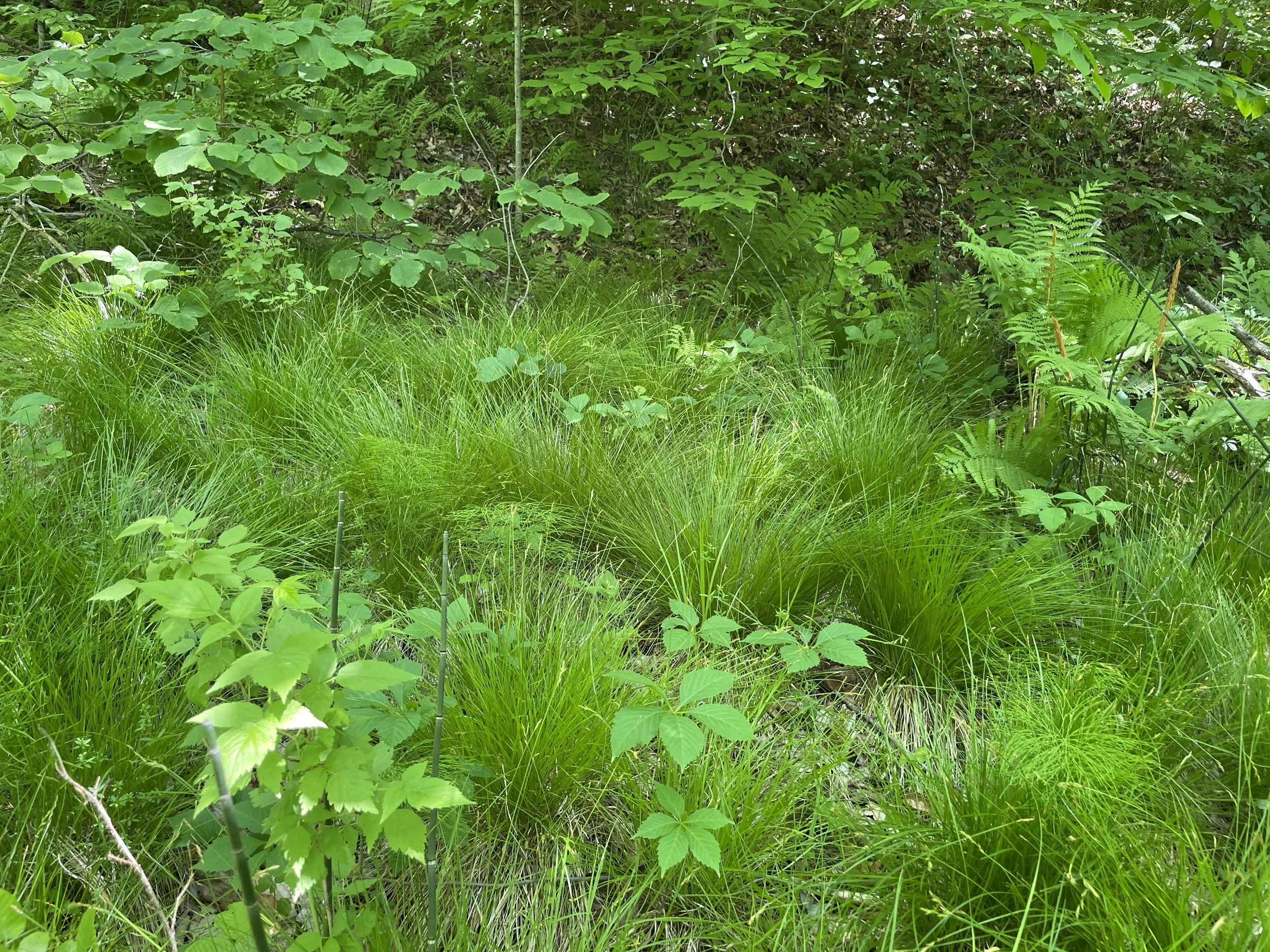
We can take inspiration from nature. Native sedges fill a small forested wetland as a lush green groundcover.
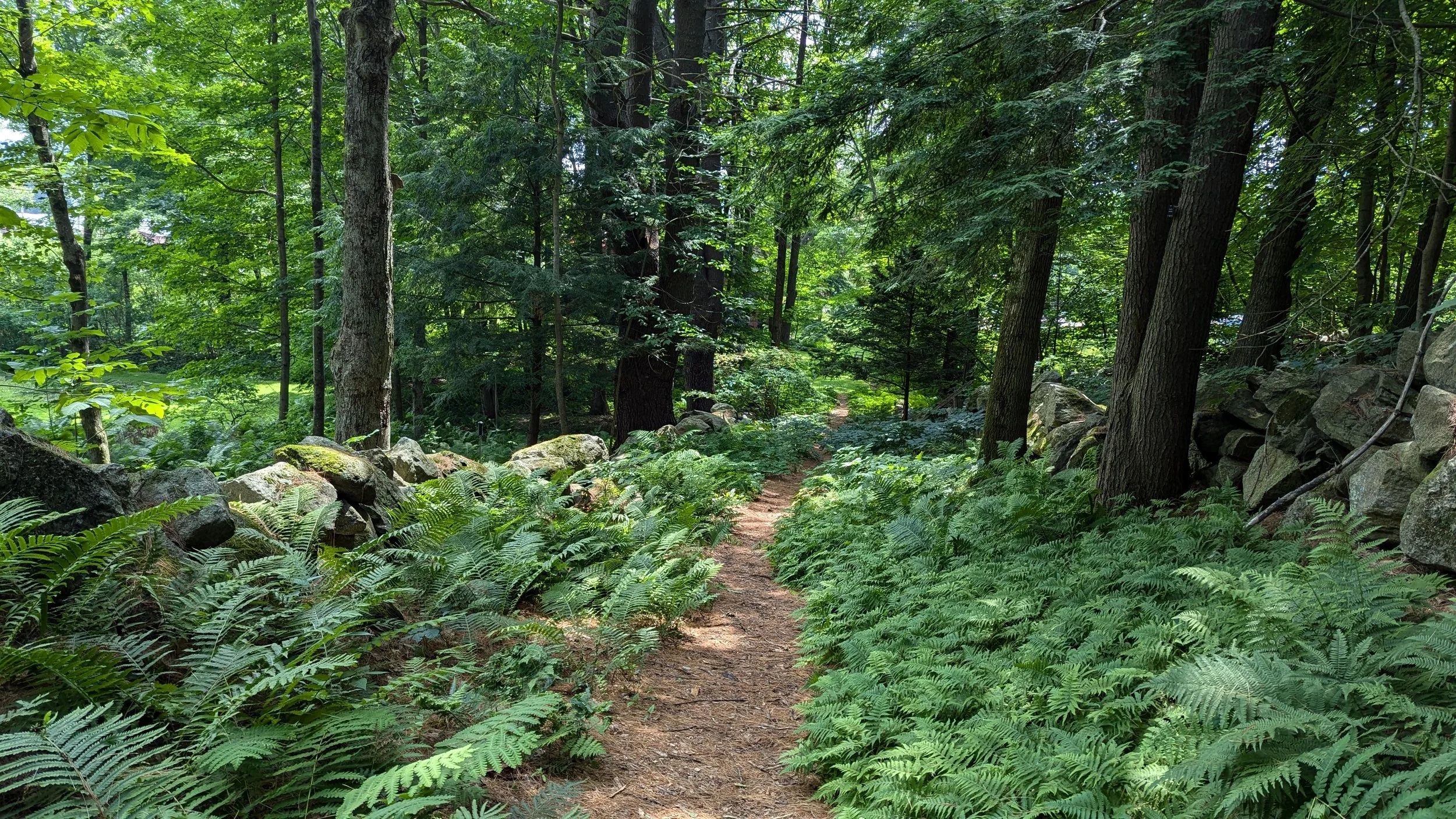
This forested path pictured here can be found at McLaughlin Garden and Homestead in South Paris, Maine. This small public garden is truly a hidden gem, tucked in a shaded lot on a busy road. Originally stewarded by Barnard McLaughlin, the gardens are a beautiful example of naturalistic garden design. Many of the plantings are substantially planted with native plants, as seen here with the dense understory of ferns.
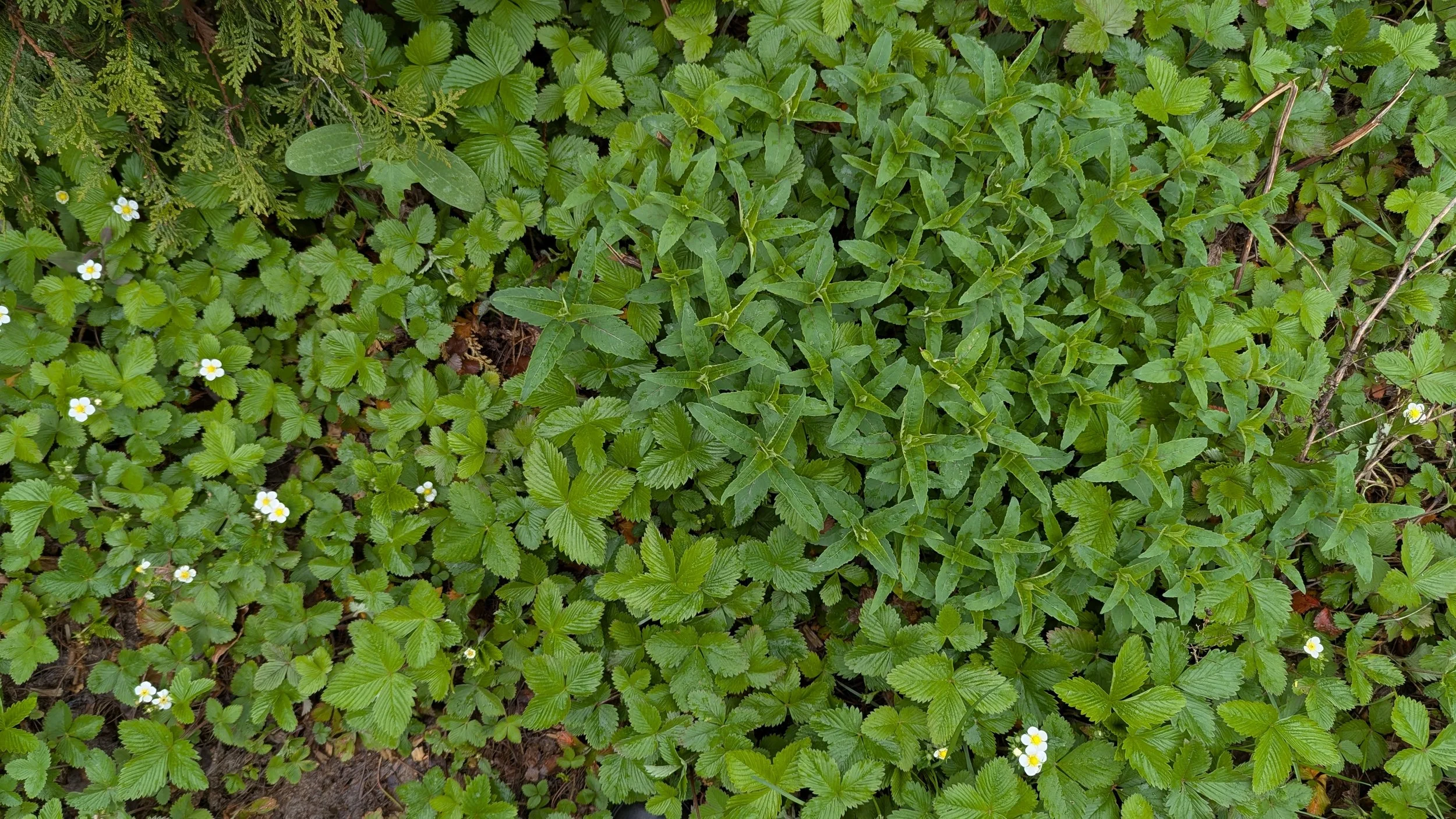
Low-growing wild strawberry (Fragaria virginiana) mingles with wild bergamot or beebalm (Monarda fistulosa) in spring. Strawberry provides an aesthetically pleasing groundcover layer while supporting bees throughout the month of June here in Vermont. Not to mention the minute but delicious bright red berries! Munching on wild strawberries makes you feel like a kid again, even if you didn’t grow up frolicking in northeastern fields.
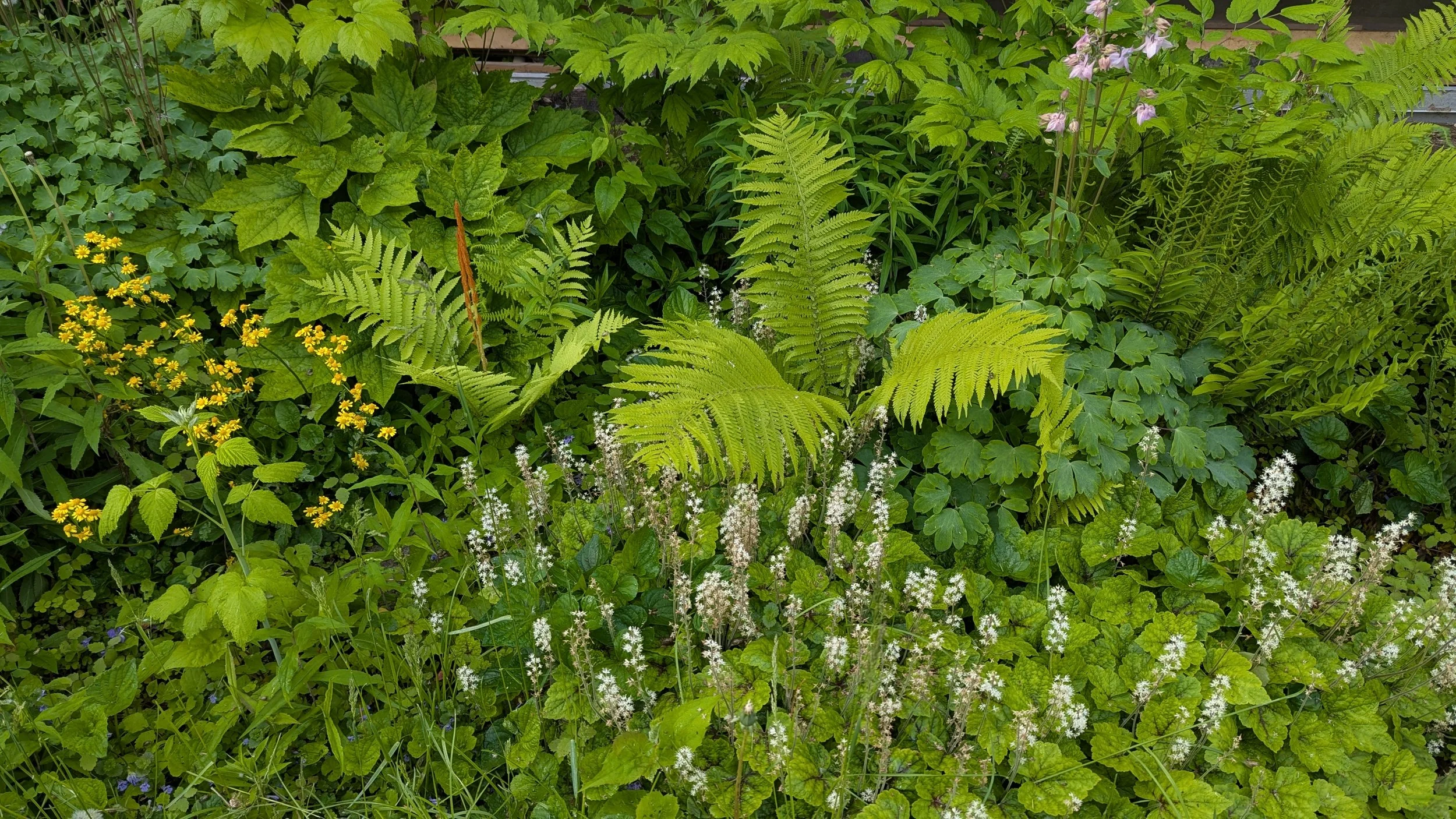
In a shady spot, ferns, foamflower (Tiarella cordifolia), and golden groundsel (Packera aurea) thrive. Each of these plants is short in stature, but they create a tiny ecosystem that provides so many more benefits than the failing lawn that was here before the planting.
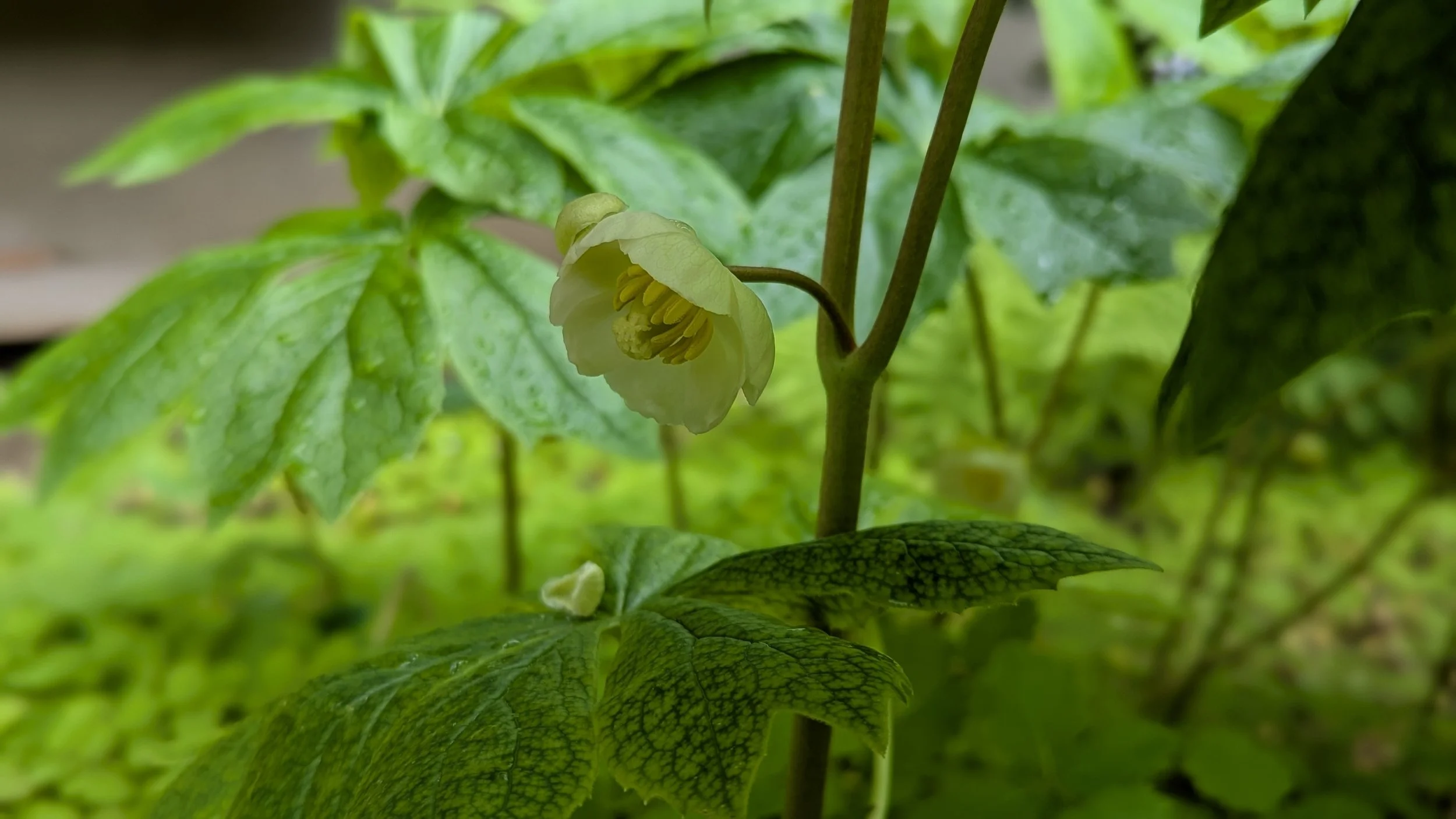
While not a pollinator magnet (it does not produce nectar), mayapple (Podophyllum peltatum) has an incredible bloom that can only be found if you get on its level - a foot off the ground and hiding under the umbrella-like foliage. Mayapple fruit is prized by box turtles, which are known in some areas to be the primary disperser of the seeds of this plant. More here.
Devon
