

I give you permission to mow your grass
Imagine for a moment: it is finally warm. It's June in Vermont and you can finally be barefoot outside. You look out and see that it's a gorgeous summer day, the dew has dried, and you wander outside. You step off the back steps of your home into a lush, green carpet of turfgrass. Think of how this grass feels under your feet.
Is it soft, cool? Does it gently tickle your toes and ankles? Do you want to slowly brush your hands through it?
Or is it stiff and pokey? Can you feel individual stems of grass poking into the sole of your foot? Is it uncomfortable unless you step carefully? Does it itch?
(I promise this post is not going to end with me trying to sell you turf!)
I assume that one of these descriptions matches your dream of a summer experience more than the other. So, let's talk about No-Mow May!
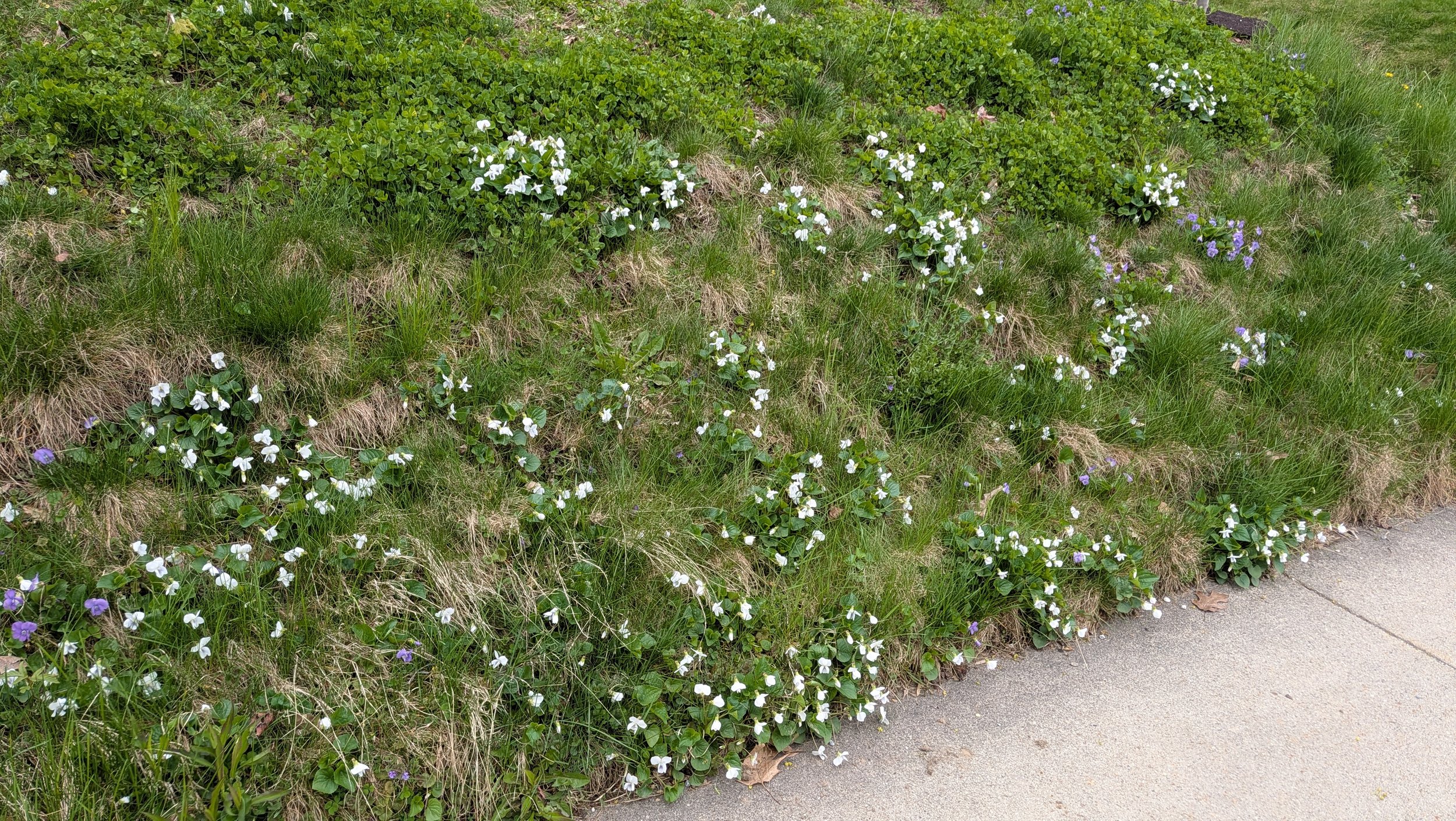
On Lawn
In reality, if my goal is to support native bees, what I need to do is reduce the square footage of lawn and replace it with something more valuable.
But, save the violets.
Things I learned from doing No Mow May
I have done no-mow May several times. Each time, our spring weather has been pretty conducive to grass growth. The Kentucky bluegrass gets pretty tall (not to mention the tall fescue - don’t get me started) and by the time May 31st rolls around, I'm worried that we're not going to be able to push the mower through it (We do most of our mowing on our small lot with a reel mower). Usually I'm right, and I end up weed whacking what feels like a small hay field.
When we wait this long to cut the grass, each grass culm (or stem) has grown well above the height of our mower blade. The culm contains more lignin than the grass blades. When we let it grow, we end up with tough, 3-inch-tall sticks. A lawn made of sticks is a bad lawn.
The end result for your lawn - and yes, even I have some lawn that I appreciate - is not great. Prickly grass, limited habitat benefit, regret.
Others have written more things about this topic. Xerces has a very balanced article. Undark provides an in-depth and detailed look. Of course, I always like pointing people to Extension resources on topics like these.
In reality, if my goal is to support bees (and I mean all bees, not just the early-rising European honeybee and American bumblebees that enjoy the dandelion feast of early spring), what I need to do is reduce the square footage of lawn and replace it with something more valuable. Something more valuable in terms of its ability to support a diversity of bees, butterflies, wasps, flies, and birds.
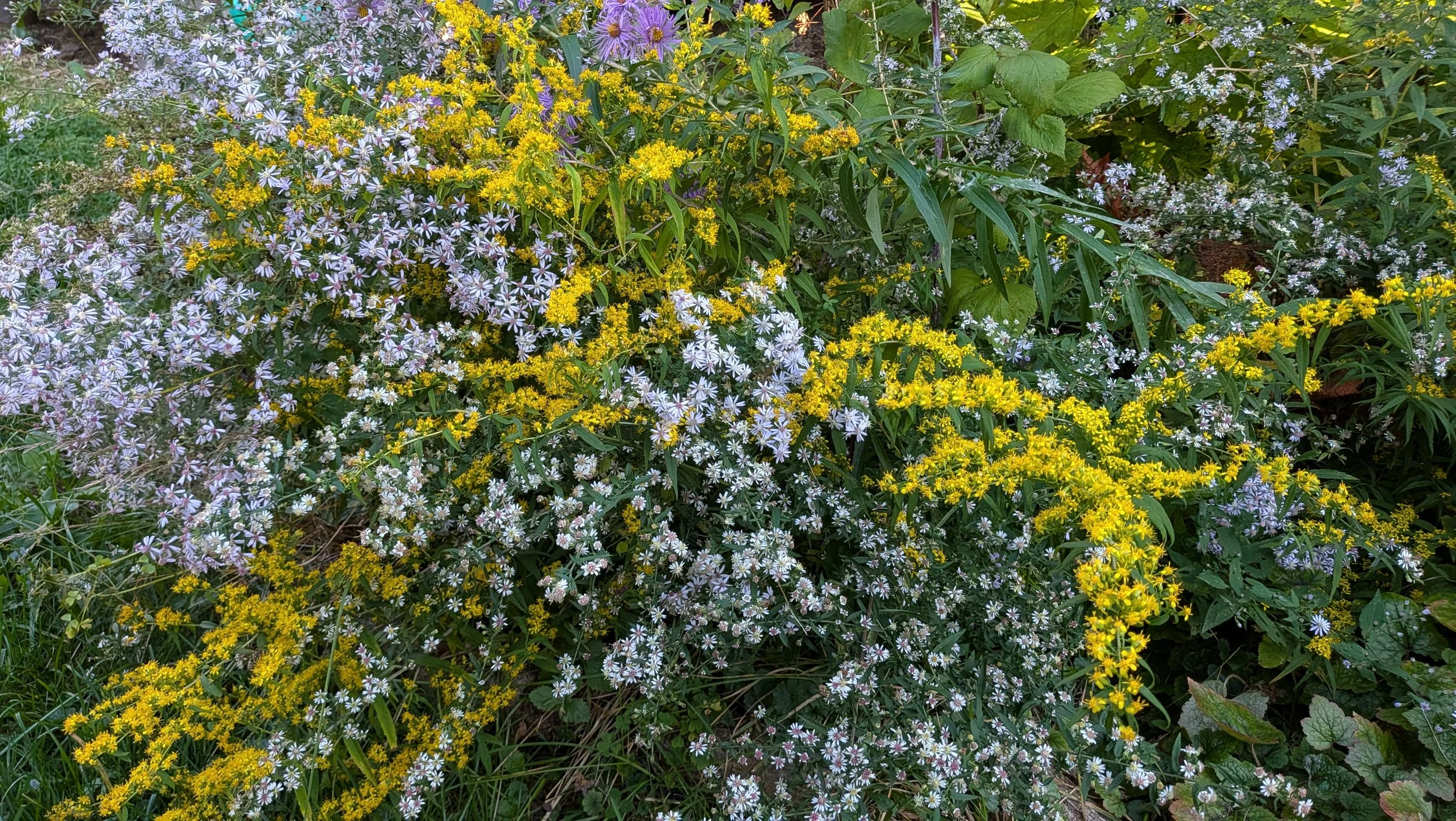
An explosion of asters in autumn.
No Mow May is the starting point, not the goal
Skipping the mower for a few weeks does serve a purpose, however. It provides an opportunity to observe what other plants are growing in your yard. Some may be problematic weeds - good to know about. Some may be beneficial native wildflowers - great to know about!
I recommend the following to folks curious about No Mow May or natural gardening: 1) Stop mowing a few forgotten corners or steep slopes for a month. Start with the spots that are either difficult to mow or never see foot traffic. 2) Raise the mower blade to 3 inches or more for the rest of the lawn. Your lawn will thank you and so will the bumblebees as they sip on violet nectar. 3) Observe. 4) Pull or treat weeds as you find them.
Then, in stages that are manageable for you, start killing or removing the lawn to make room for a new planting.
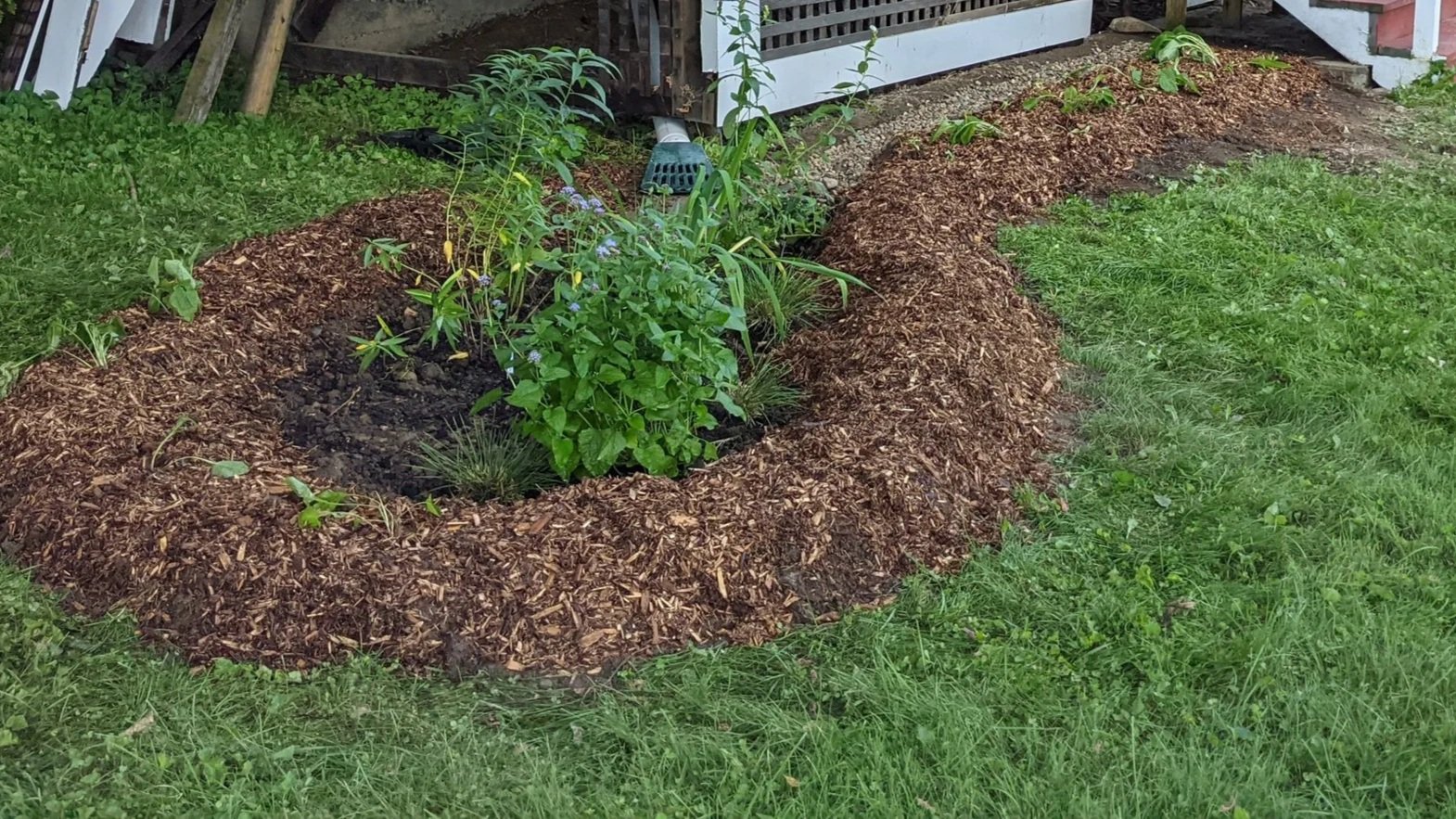
Manageable beginnings
Any type of gardening is an experiment. Start small and start learning.
There are so many resources available to help you convert areas of lawn when you are ready. Benjamin Vogt provides the most honest and thorough educational resources (articles, webinars, PDF guides) on this topic. This post of his will get you started.
Turfgrass was bred to thrive
I find it helpful to step back and really think about how we got here, from a purely vegetative point of view. Bringing in some history (otherpeople do a better jobthan I) can aid in understanding what to do next, if we want to direct vegetation change toward another path. How did we get to lawn?
First we cleared trees, one by one, dozens by dozens, thousands by thousands. Then we smoothed the land with tools and machines; we pushed soil this way and that, we lifted it and moved it, carried it away and brought different soil in.
Meanwhile, somewhere in the midwest, grass was grown on a farm. This grass was grown from seed sourced from Europe and other regions, selected carefully for its vigor and beauty. This seed was bred over generations to be robust, hardy, and resilient to disturbance and drought. On the farm, it was fertilized and probably managed for pests (insecticides). Then seeds were then collected, harvested, packaged into plastic bags, shipped by truck to a store. In some cases it was coated with fertilizer before being bagged up.
Then, probably, someone carefully spread the seed onto the yard. They watered it, covered it with straw, and took every step necessary to grow a robust perennial crop of sod.
So, of course, after all of that research, plant breeding, and inputs, the lawn is difficult to remove or kill. It has a hundred years of agricultural science backing it up. When we want to convert a lawn to a native plant wildflower meadow, it is not as easy as planting into the lawn. The turfgrass will overtake the plantings every time. We are embarking on a full-on, real-deal ecological restoration project, with all of it’s uncertainties and challenges. I think if we can acknowledge this from the get go, we’ll be better off.
The good news: we can plant for nature.
It may not look like it in your neighborhood yet, but the native plant gardening movement is in full swing. Growers are increasing plants. Educational resources abound. Practitioners are growing in number. Even the Today Show is in on it now.
It's about time we get in touch with local ecology. It’s not too late, and we can learn how to do it.
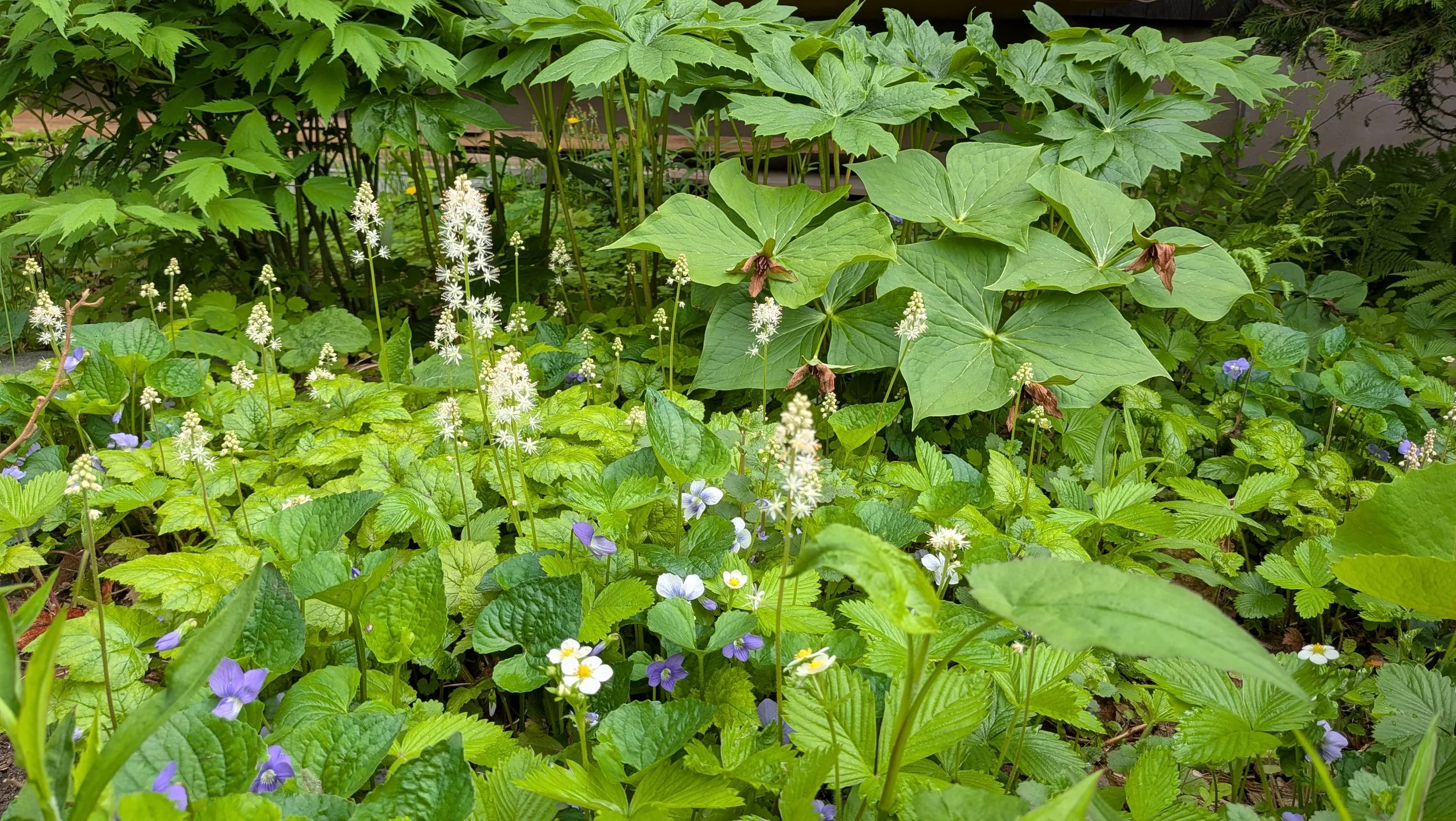
My home shade garden, mid-May. Tiarella, Viola in foreground; Trillium, Podophyllum, and Actaea in rear.
