

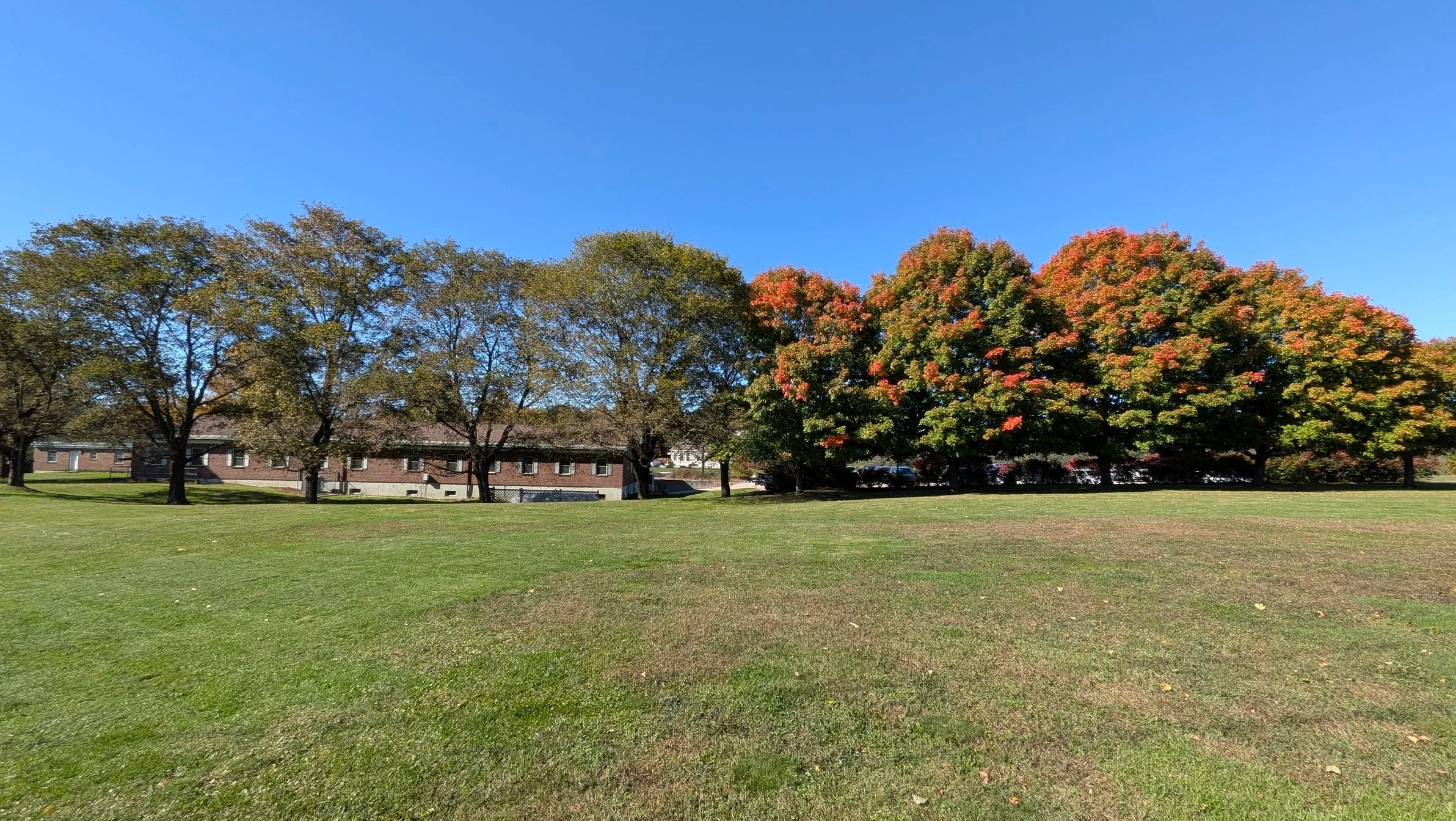
Norway maples on the left and sugar maples on the right show a stark difference in plant performance.
Sometimes the case for a native plant makes itself.
Driving north of Brandon, Vermont, there was a stark contrast in foliage in a single row of maple trees this fall. In the spring, these looked up uniform, their differences imperceptible to a driver going 50 mph down route 7.
Last week, half of the planting absolutely stuns with fall colors, while the other half stands brown and barren.
The colorful trees are sugar maples (Acer saccharum). The brown crispy-leaved trees are an entirely different and introduced species, Norway Maple (Acer platanoides). Norway maples are more susceptible to a few different types of fungus that discolor and destroy the leaves. This year was especially good for the fungus because it was cool and damp for so long in spring/summer.
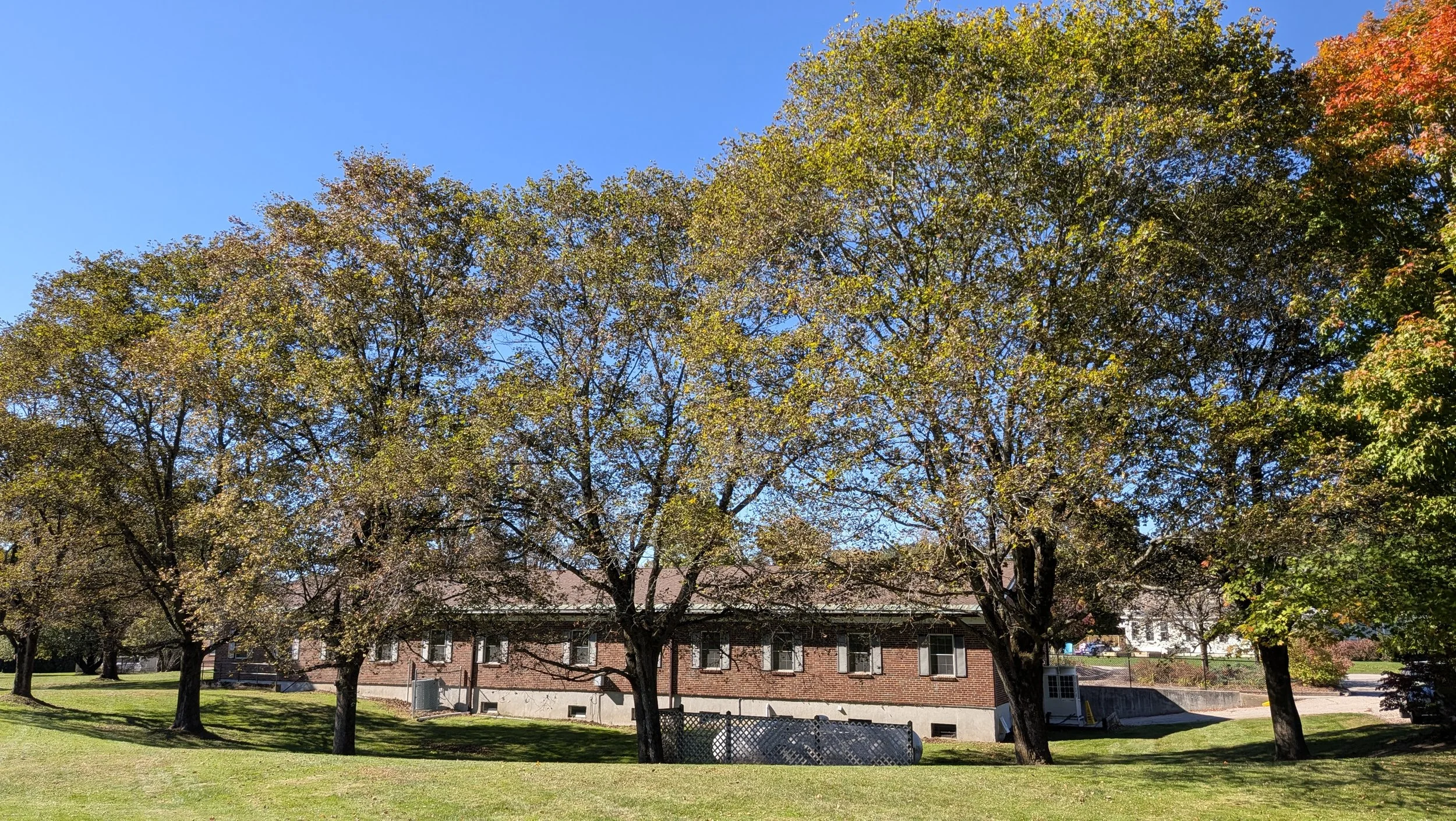
Less-than-peak
A fungal pathogen has had a big year with our wet spring and summer in Vermont. This tree species is impacted more severely than other tree species.
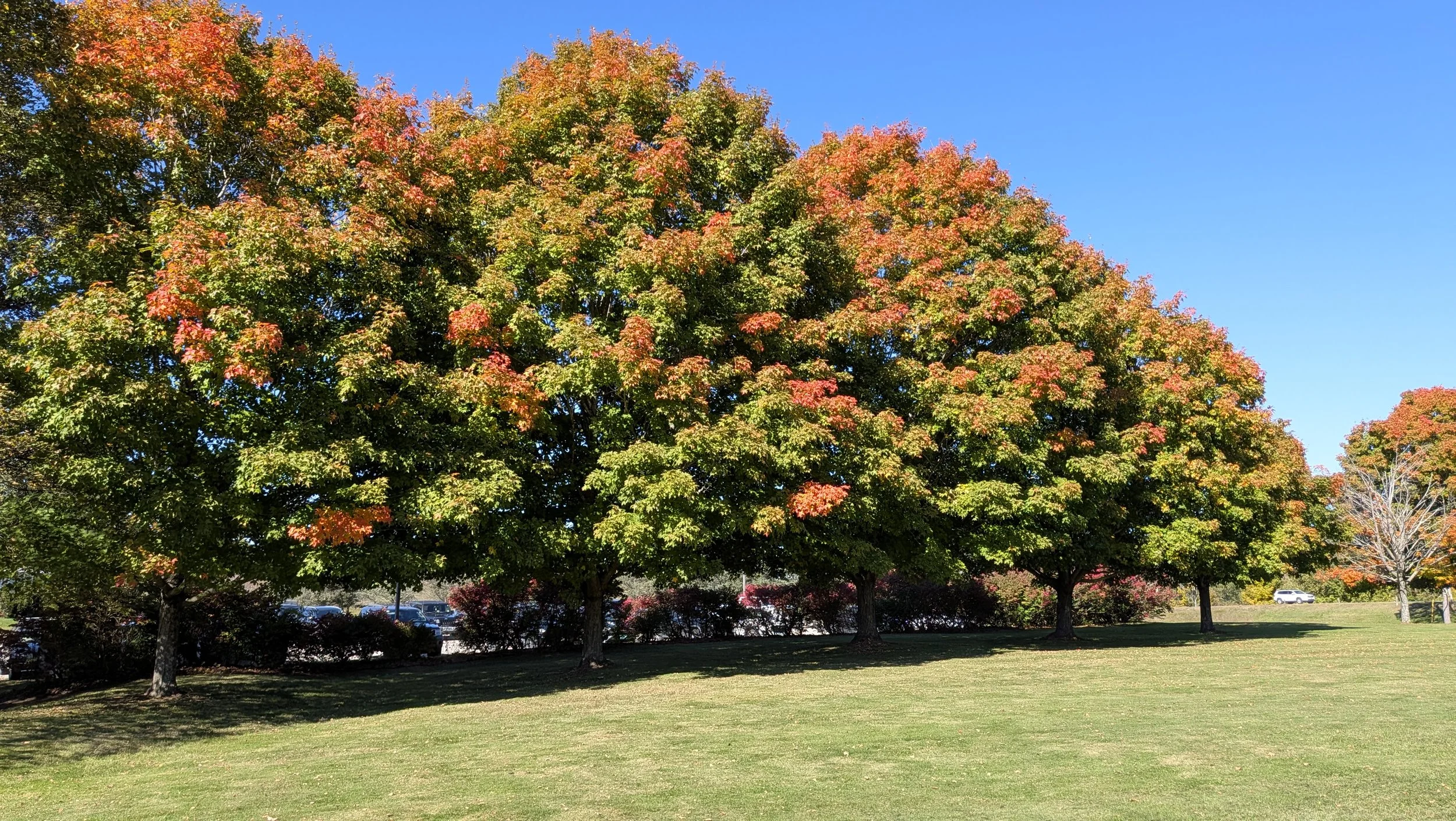
That’s more like it:
The native sugar maple had a great year, however.
Norway maples are native to Europe and Asia. This species is increasingly recognized as ecologically problematic in the eastern US, where they seed into natural areas outside of their planted locations. There, they shade out native spring ephemeral wildflowers and other tree seedlings.
It isn't always feasible to remove mature Norway maple trees. But, consider replacing them with a native alternative when you can.
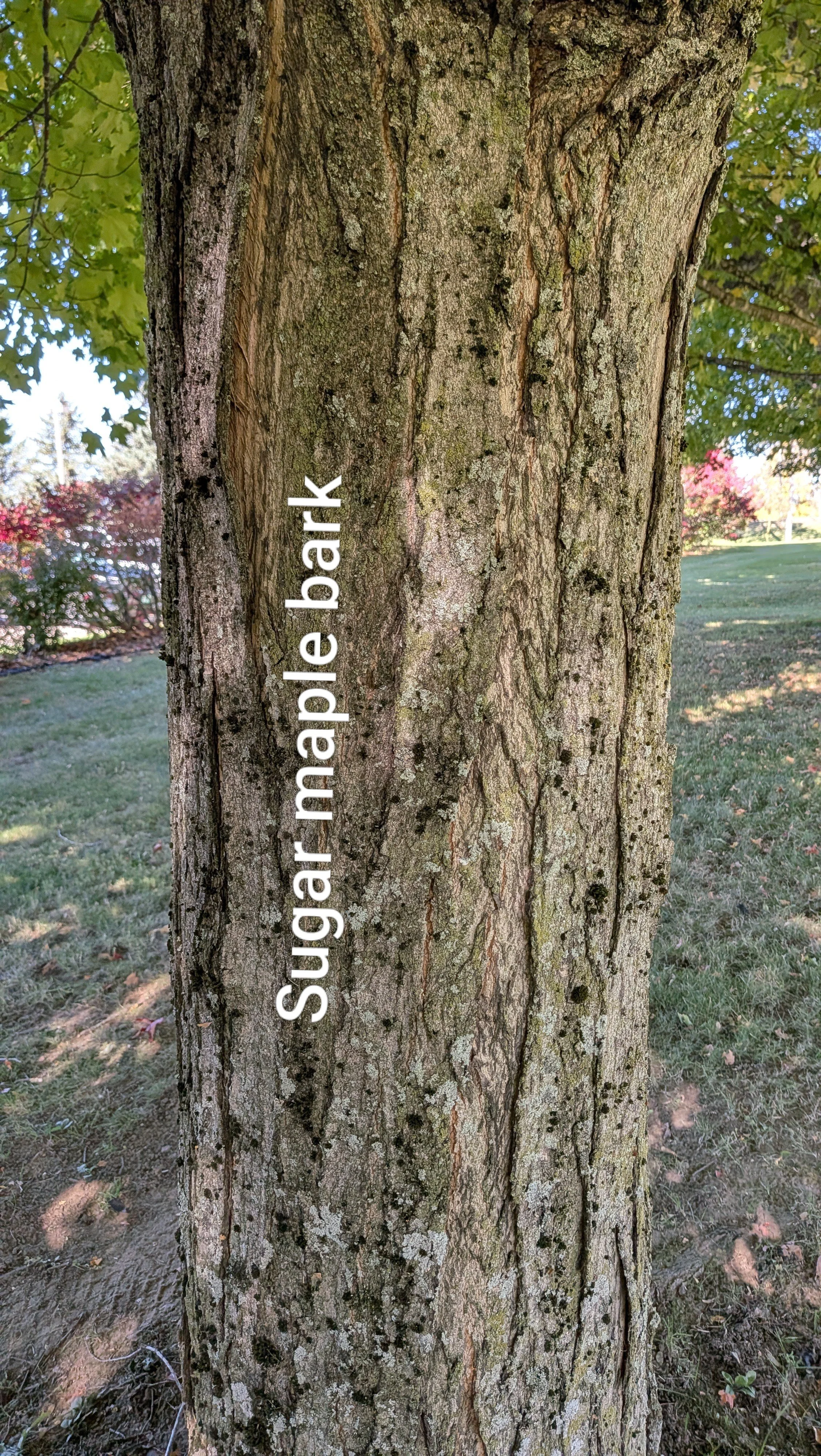
Other than the crispy leaves this year, how can you tell them apart? The bark on the two trees is quite different - Norways have vertical ridges that look like stripes. (It sort of looks like the bark of common ash trees). Sugar maple has matte grey bark that forms wide flat strips that are solid to the touch.
Norway maple leaves are generally wider than they are tall, and commonly have 5-7 lobes. Sugar maples have 5 lobes and are not as broad.
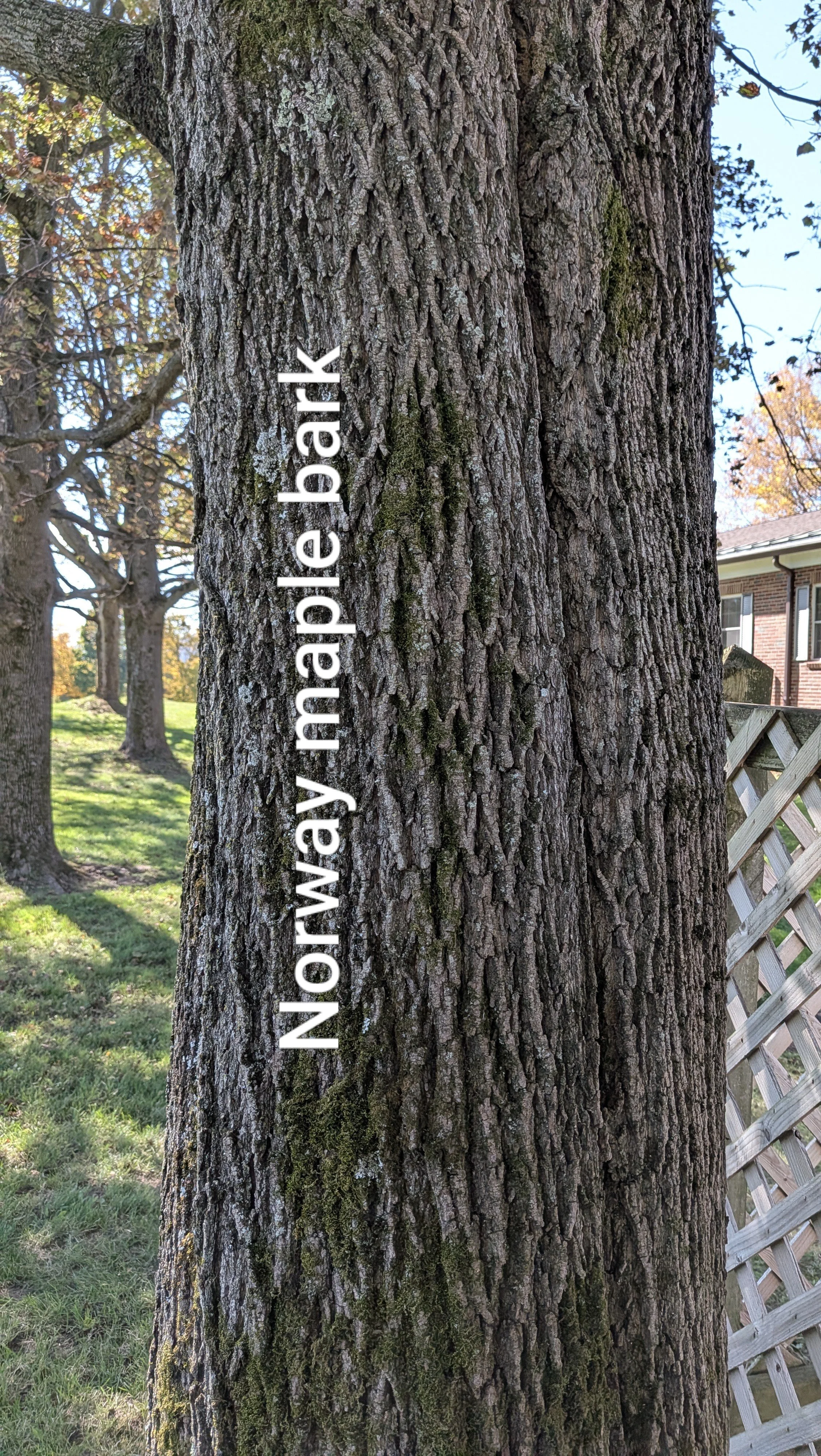
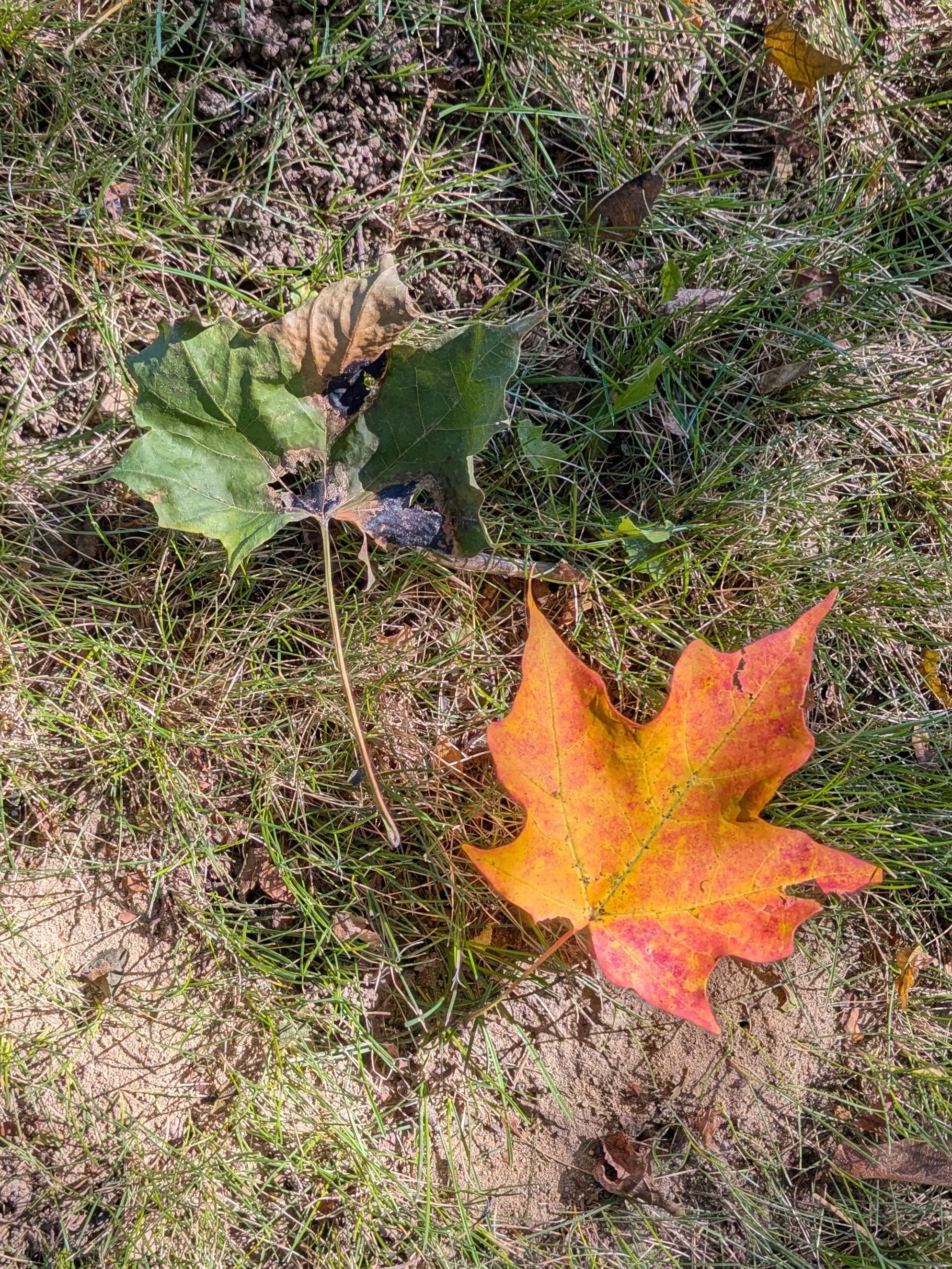
To me, the above images show that we just don’t always know what the outcome will be when we introduce a “high performing” plant species to a new region. The Norway maple has been heralded as a solution to all of our urban forestry woes, and is now one of the most common street trees in the United States.
This species is now largely removed from the market because if its known issues (escaping cultivation and foliage problems). Luckily, there are lots of other options for street trees, and the urban forestry field has learned to plant a diverse array of species to protect against tree health issues that arise from planting monocultures.
Some trees to consider when replacing a Norway Maple:
Sugar maple (Acer saccharum)
Red maple (Acer rubrum)
Tulip poplar (Liriodendron tulipifera)
Common hackberry (Celtis occidentalis)
Black gum (Nyssa sylvatica)
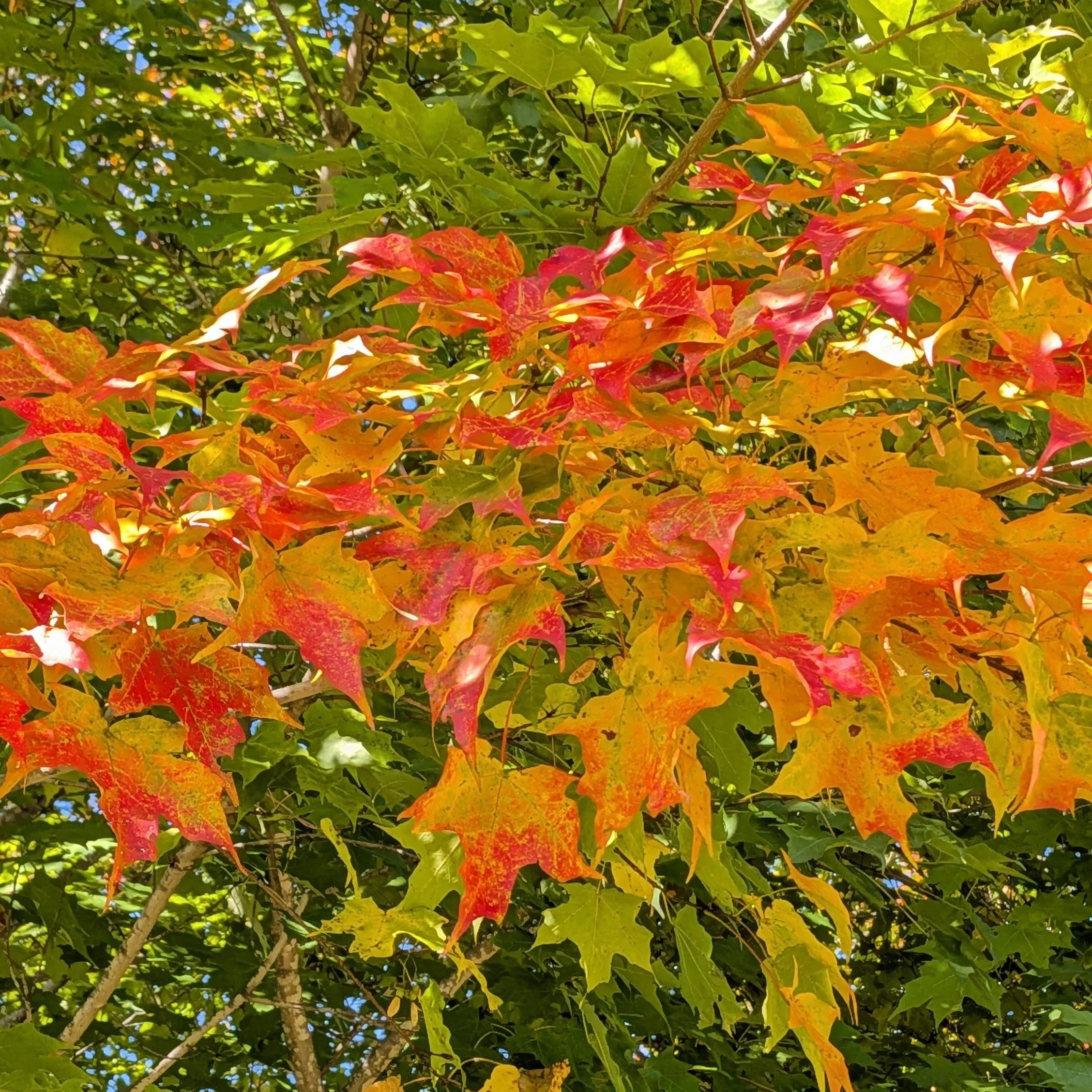
A close-up image of yellow and red fall foliage of sugar maple
Sources:
Doroski, Danica A.; Keriö, Susanna E.; Wegrzyn, Jill L.; Ward, Elisabeth B. 2026. Norway maple (Acer platanoides). In: McNulty, Steven; Callaham, Mac A., Jr., project co-leads. Silvics of North America. U.S. Department of Agriculture, Forest Service; Natural Resources Canada, Canadian Forest Service; National Forestry Commission of Mexico, collaborators. Washington, DC: U.S. Department of Agriculture, Forest Service. https://doi.org/10.2737/sna.acer.platanoides.
Nowak, J. and Rowntree, R.A. 1990. History and Range of Norway Maple. Arboriculture & Urban Forestry (AUF) 16 (11) 291-296; DOI: 10.48044/jauf.1990.064 <https://auf.isa-arbor.com/content/16/11/291>
SUNY ESF. 2026. Seeing Bare Norway Maples Already? Fungal Diseases Are Mostly to Blame. <https://www.esf.edu/news/2026/norway_maples_fungal_diseases.php>
Woodmansee, J. 2025. Distinguishing Between Norway, Sugar, and Black Maples. <https://extension.purdue.edu/news/county/whitley/2025/05/distinguishing-between-norway-sugar-and-black-maples.html>
